






If you are choosing between a desert safari in Dubai and one in Abu Dhabi, here is the honest starting point: they are more alike than the marketing suggests. Both build on the same core ingredients. The real question is what kind of desert day you want, and how far you are willing to go for it.
There is also a third option that sits neatly between the two emirates, and that many visitors only discover afterwards: the protected dunes of Mleiha, in Sharjah. This guide compares Dubai and Abu Dhabi, then explains where Mleiha fits. By the end you should know which of the three suits your trip, and why the answer is rarely the most obvious one.
The Dubai desert safari
The Dubai safari is the convenient, lively option. Camps sit close to the city, so it is easy to slot into a short trip, and the format is familiar and social.
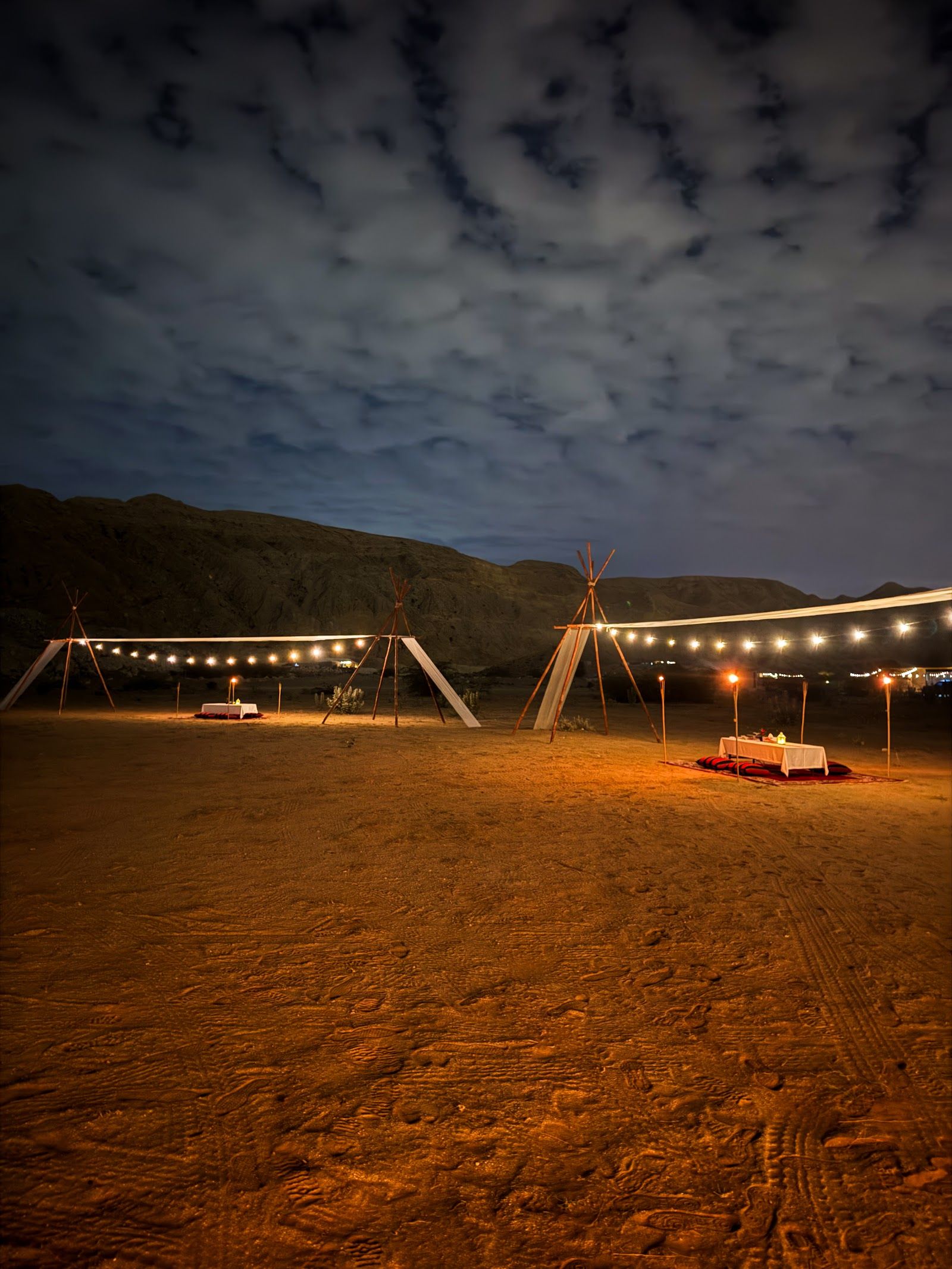
What you can expect:
- Short transfers from the city to nearby dunes
- Dune bashing in a 4x4, then a camp with a buffet and a stage show
- Camel rides, sandboarding, henna, and shisha
- Big groups and a fixed timetable, especially in peak season
It is genuinely fun and a fine first taste of the desert. The trade-off is crowds: the closest camps are shared by many operators and fill up fast.
The Abu Dhabi desert safari
The Abu Dhabi safari trades convenience for scale. The emirate reaches down toward the Liwa and the edge of the Empty Quarter, home to some of the largest dunes in the country, so the scenery can feel more remote and dramatic.
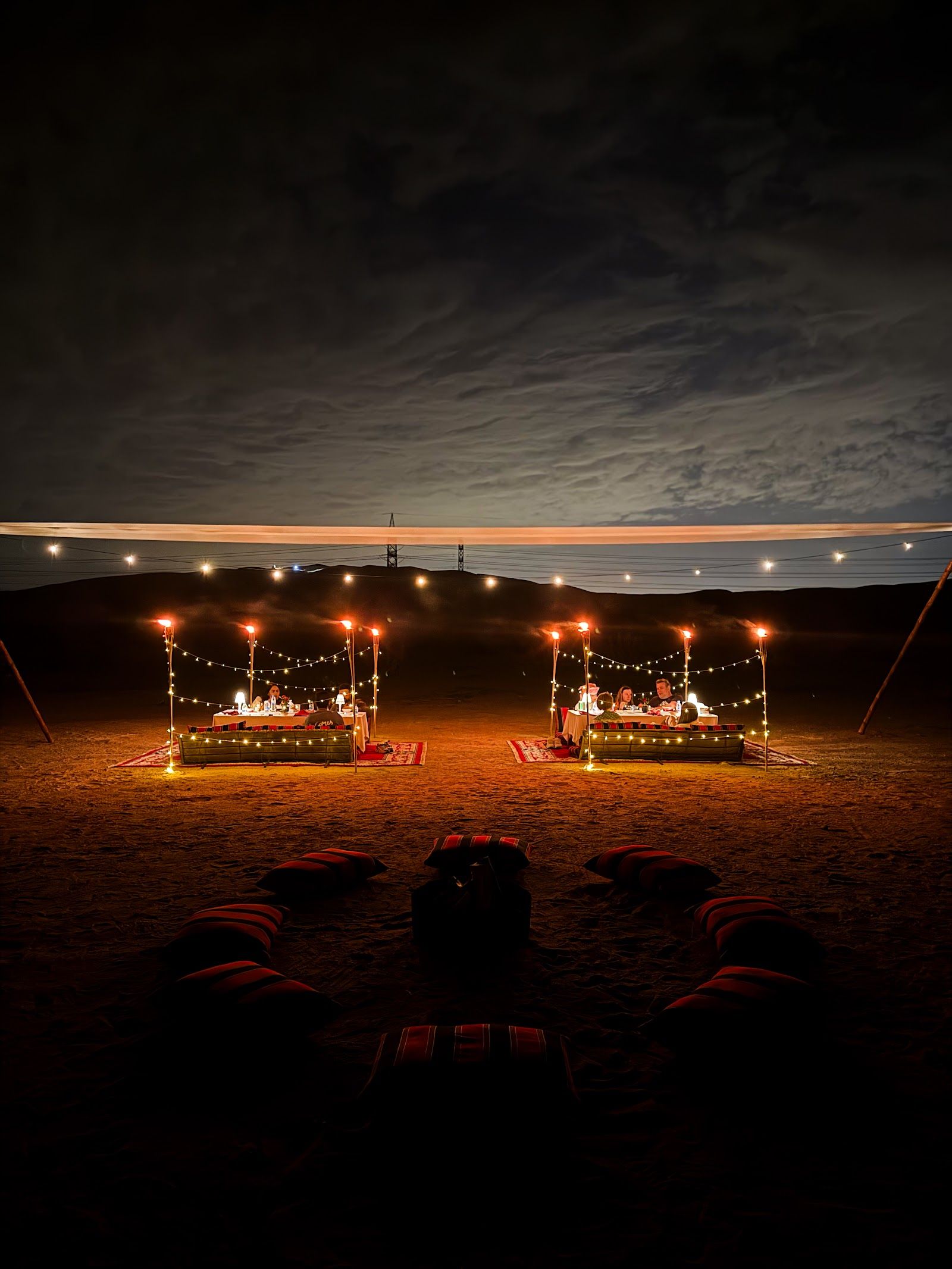
What tends to set it apart:
- Bigger, more sweeping dunes the further south you go
- A quieter, more remote feel than the busiest Dubai camps
- Longer travel time, particularly for the deep-desert dunes
- The same core safari format of driving, camp, and dinner
If you are already in Abu Dhabi, or you want the sheer scale of the big dunes, it is the stronger pick.
Dubai vs Abu Dhabi: an honest comparison
Set side by side, the decision comes down to a few clear trade-offs:
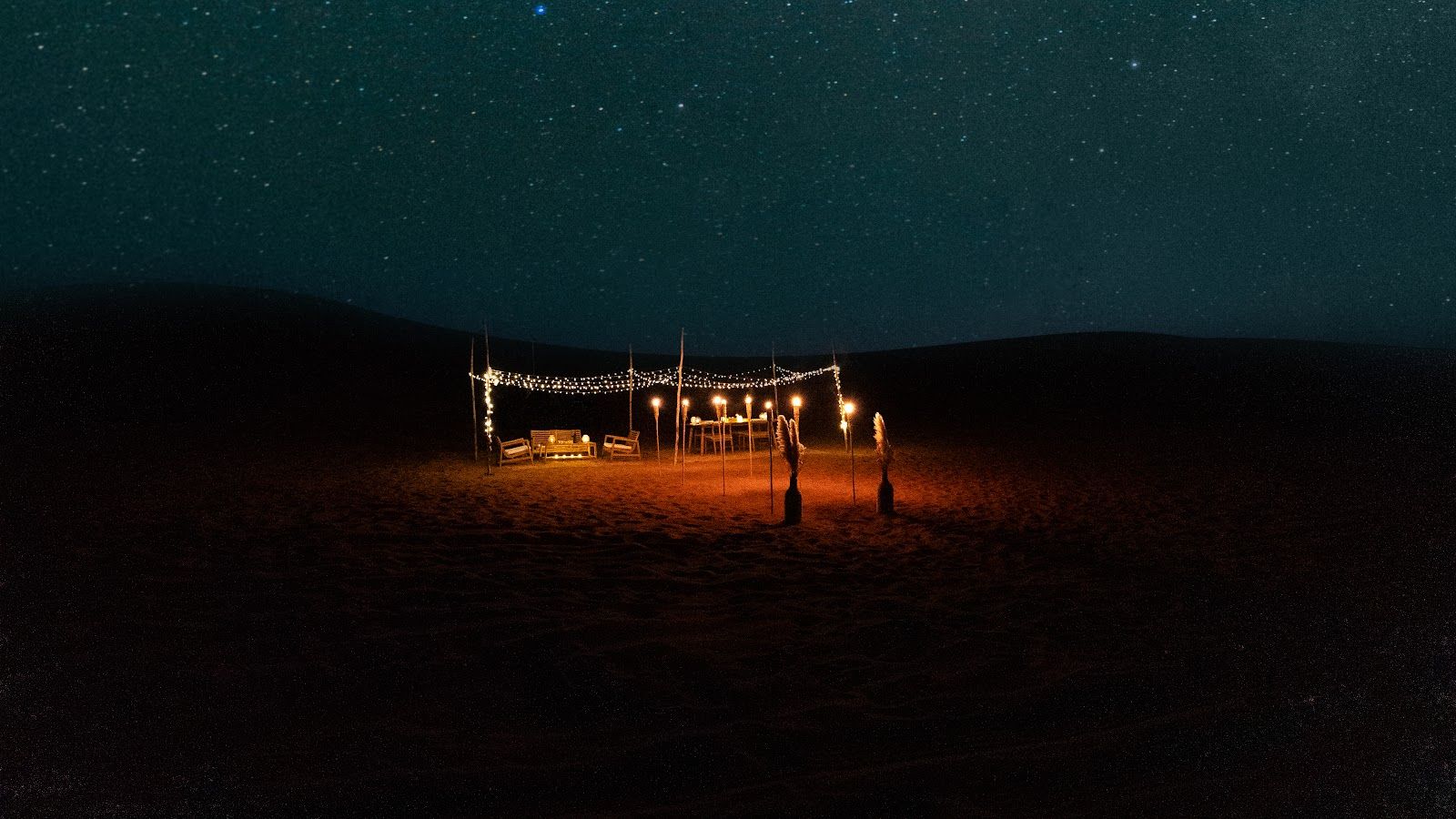
- Access: Dubai wins on convenience; Abu Dhabi asks for more travel time
- Crowds: Dubai's nearest camps are busiest; Abu Dhabi's deep desert is quieter
- Scenery: Abu Dhabi's Liwa dunes are grander; Dubai's are easier to reach
- Style: both run the same camp-and-show format at heart
- Price: shared safaris in both are affordable; private and premium cost more
Neither is objectively better. They suit different trips, and both deliver the classic camp experience well.
The alternative to both: Mleiha in Sharjah
If the part that puts you off is the crowded camp, there is a third way. Mleiha National Park, in Sharjah, is a protected stretch of desert about 45 to 60 minutes from Dubai and roughly two hours from Abu Dhabi. Being permit-only keeps the numbers down by design.
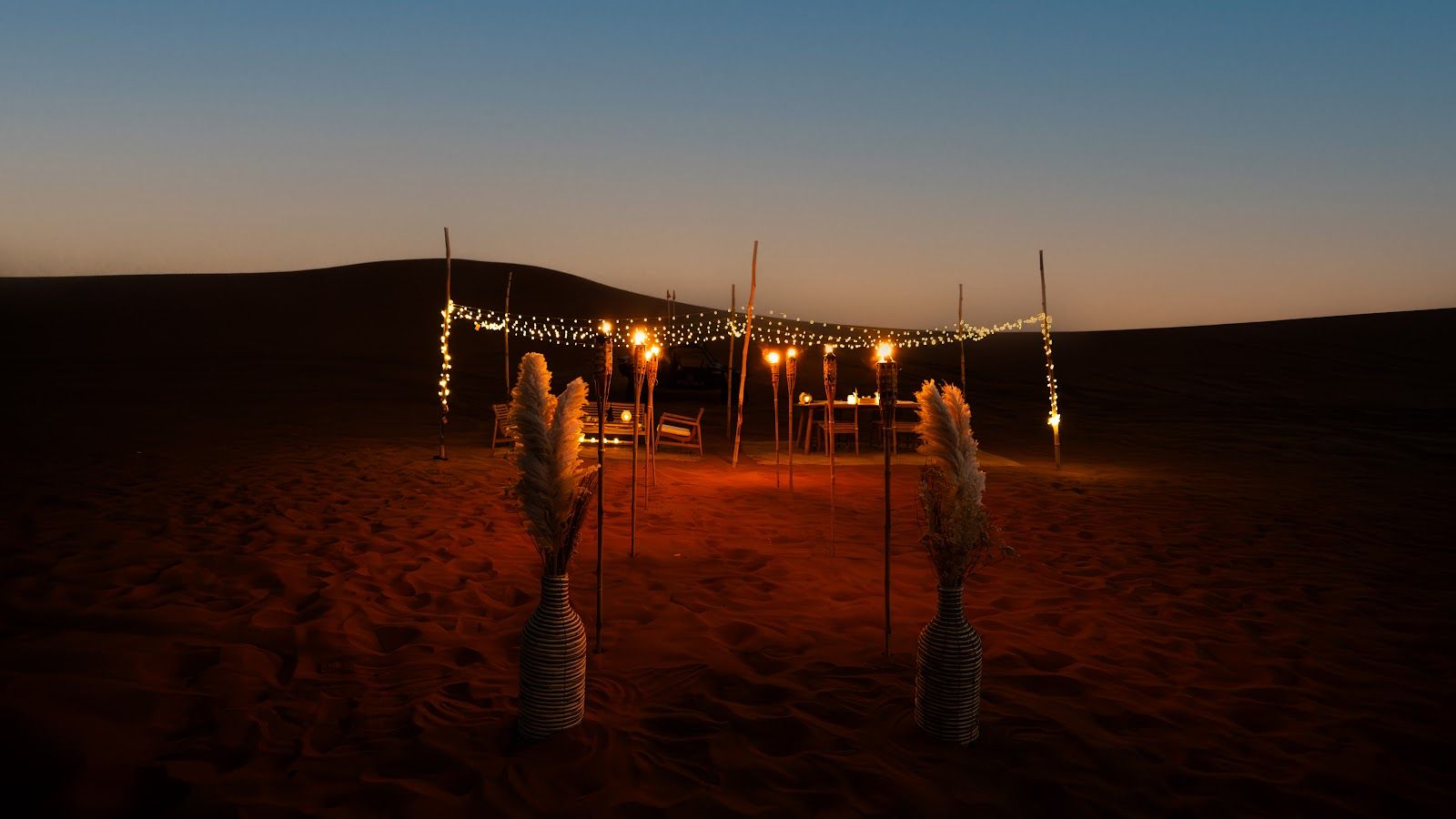
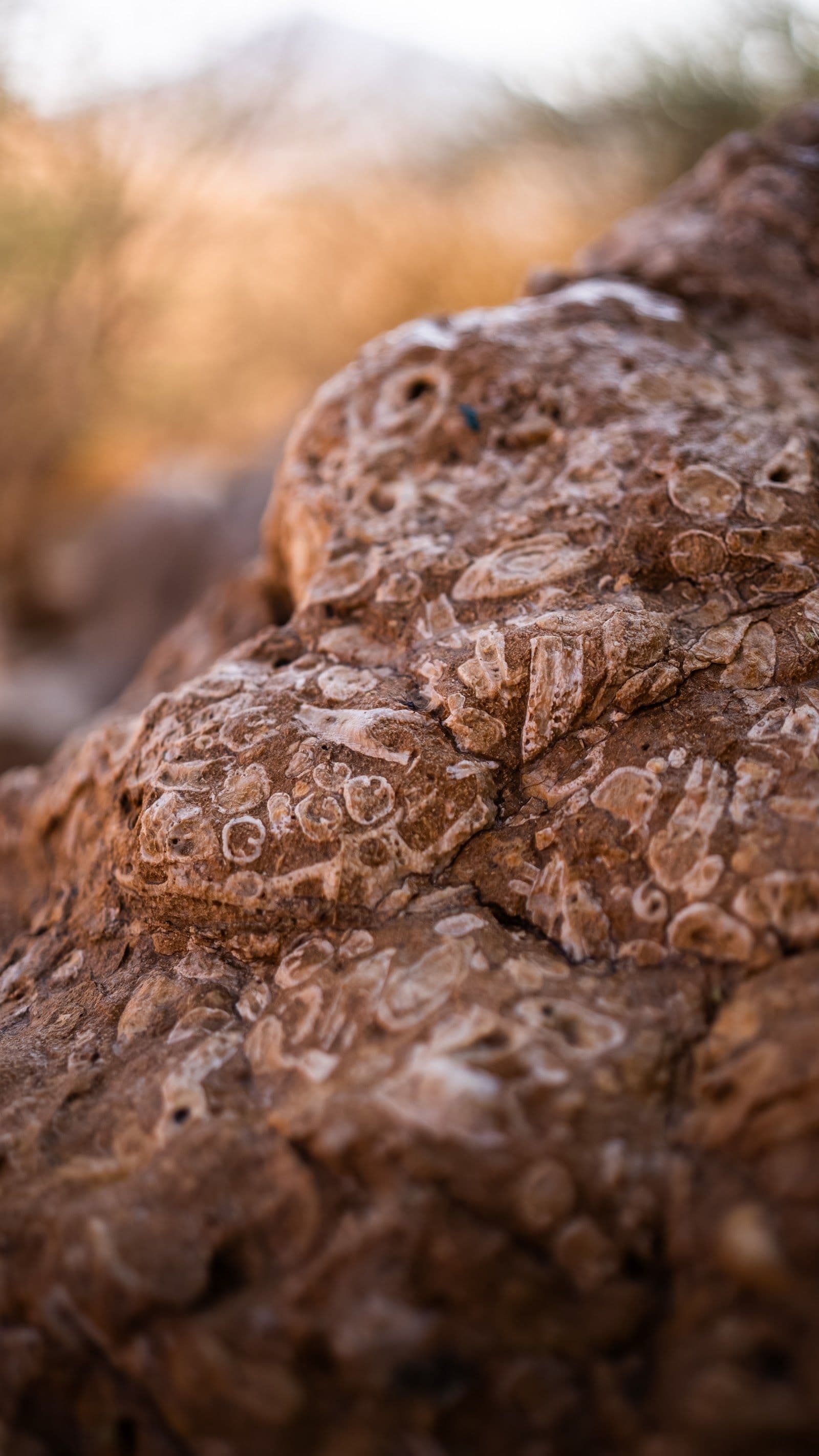
This is a different class of setting: a UNESCO-nominated palaeolandscape with 80-million-year-old fossils and 180,000 years of human history, marked by Fossil Rock and Camel Rock. Zerzura operates here as the only permitted dune buggy operator, on a sustainable model with solar power and ghaf-tree planting. It reads as a premium desert safari in Sharjah, or a day-trip alternative to an Abu Dhabi desert safari.
What a Mleiha safari actually involves
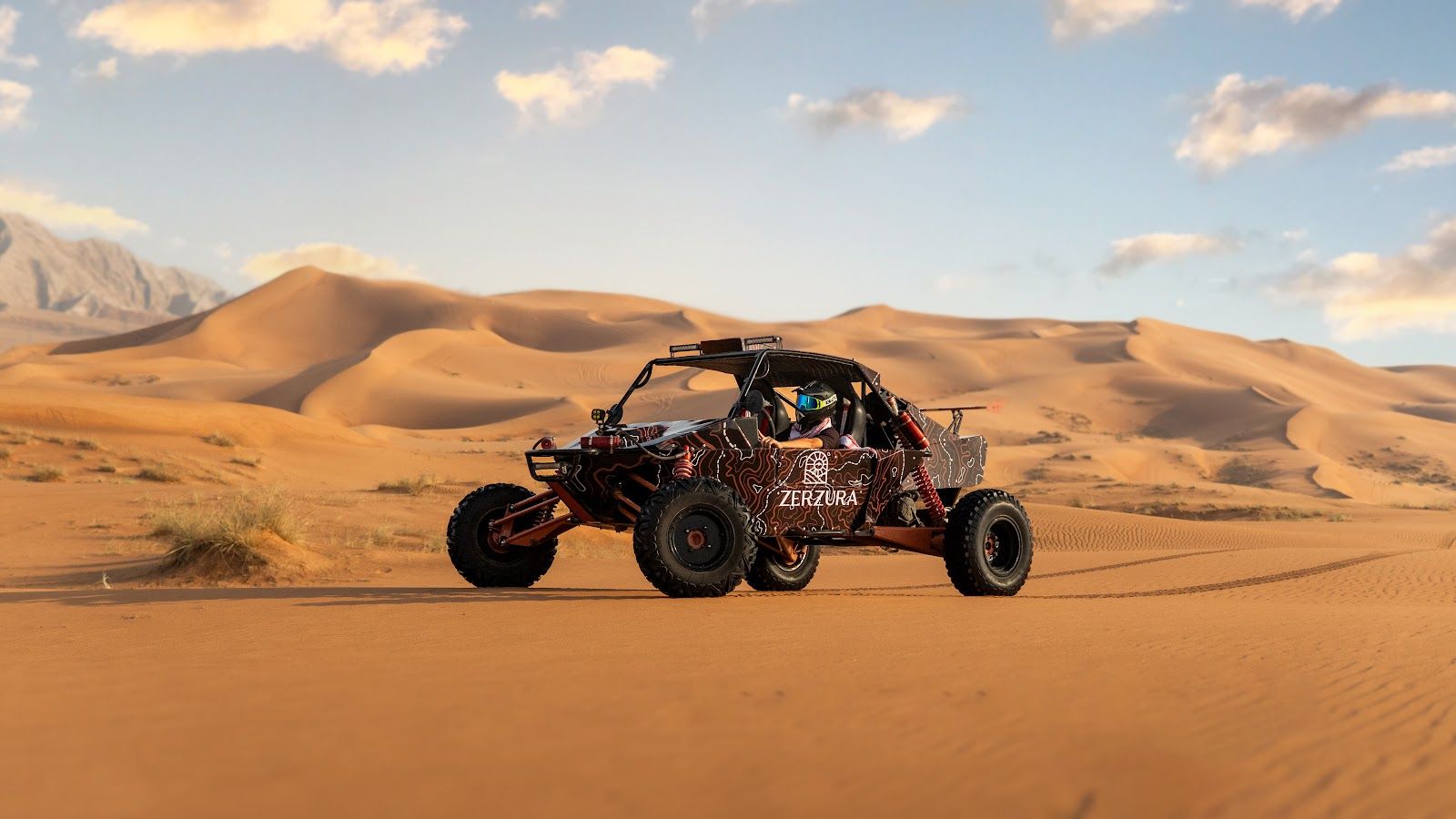
The biggest departure from both city safaris is that you drive. Instead of riding to a camp, you take the wheel of your own custom-built buggy in a guided convoy, after a briefing, with no experience required. That single change reshapes the whole day: you are a participant rather than a passenger, and the desert becomes something you handle instead of something you watch.
A day at Mleiha includes:
- A self-drive "Desert Fox" buggy and full safety gear
- A guided convoy with an experienced lead driver
- Sandboarding and a camel ride
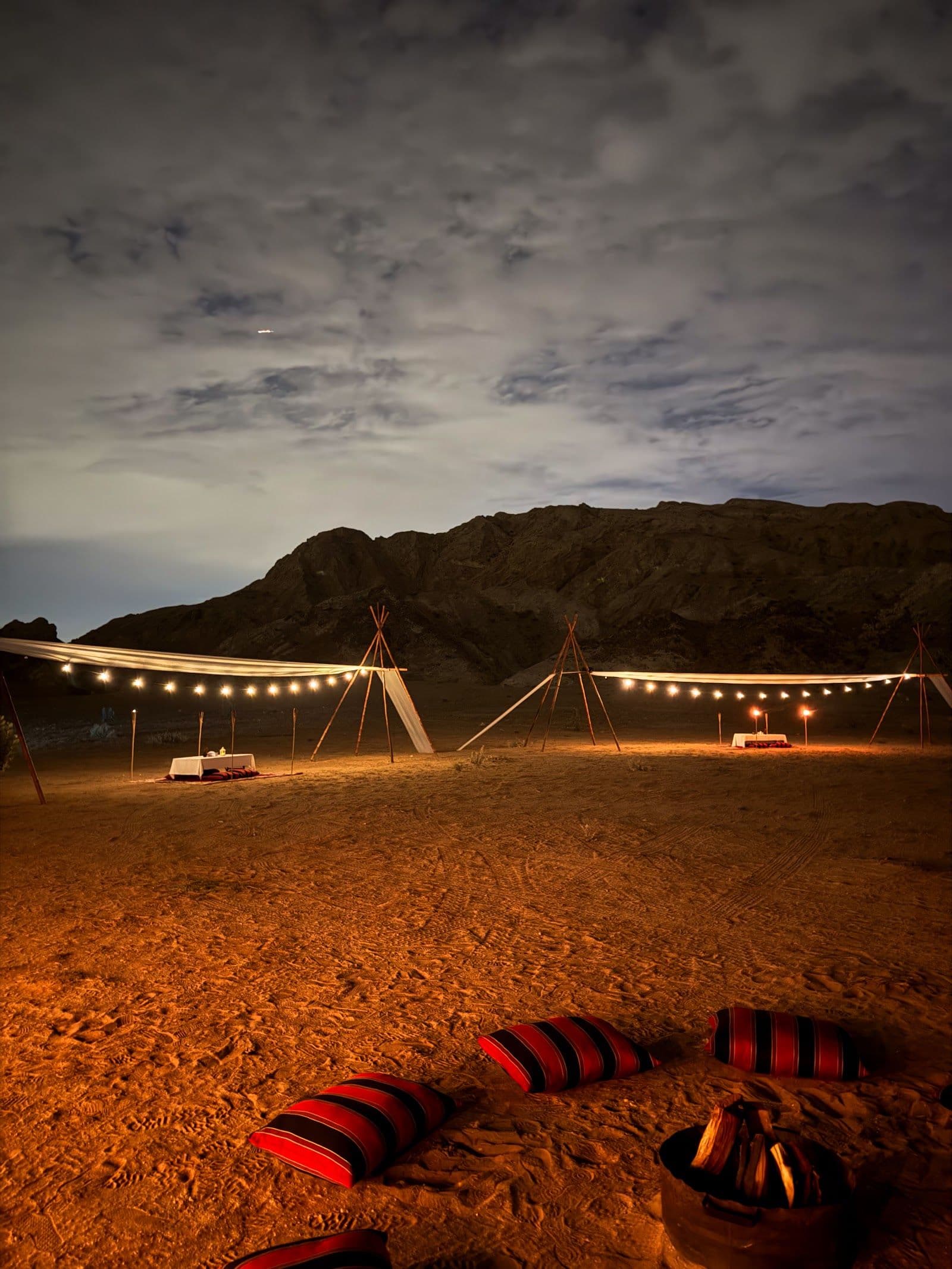
- A heritage four-course dinner in a solar-powered camp
See the self-drive dune buggy in Mleiha for the full experience. It swaps the buffet-and-show evening for something quieter and more hands-on.
Fitting a safari into your trip
Whichever emirate you lean toward, a safari does not have to take over the day, and knowing how it fits makes the choice easier.
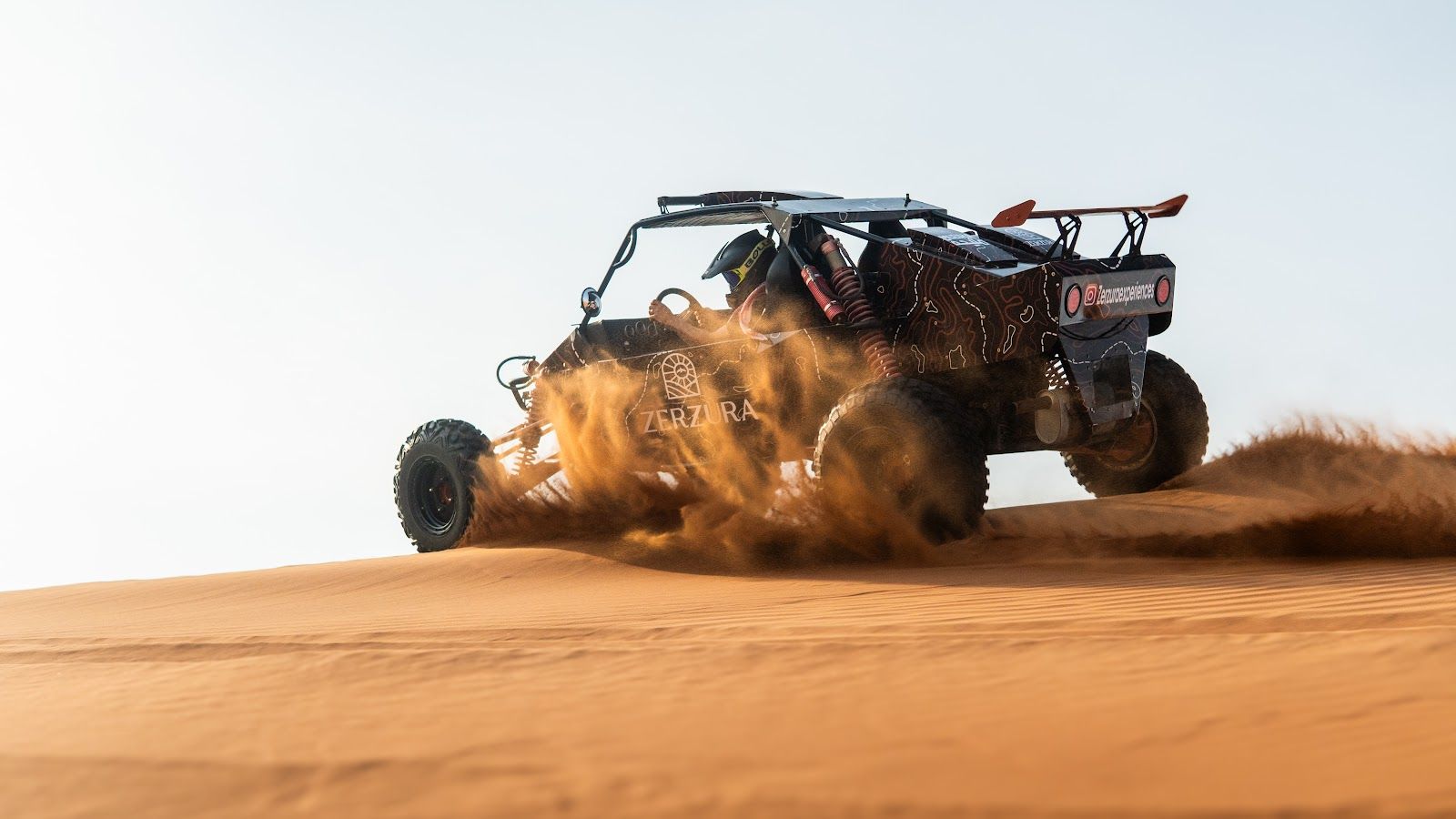
A standard evening safari, in Dubai or Abu Dhabi, tends to run around six hours with transfers, landing you back late. A Mleiha day is more flexible: a half-day around the self-drive buggy fits easily alongside your city itinerary, while a full day adds fossils, history, and dinner.
- Short on time: a half-day drive, morning or golden hour
- A full day: driving, heritage, and dinner under the stars
- Travelling from afar: hotel transfers remove the drive entirely
For most trips, the deciding factor is not the desert itself but the logistics around it. The version with the least hassle and the most control usually wins, which is quietly where a protected-park day pulls ahead of a packed camp.
So which should you book?
Choose a Dubai safari if you want convenience and a lively first taste, close to the city with minimal planning. Choose an Abu Dhabi safari if you are based there, or you want the scale of the Liwa's big dunes and do not mind the drive.
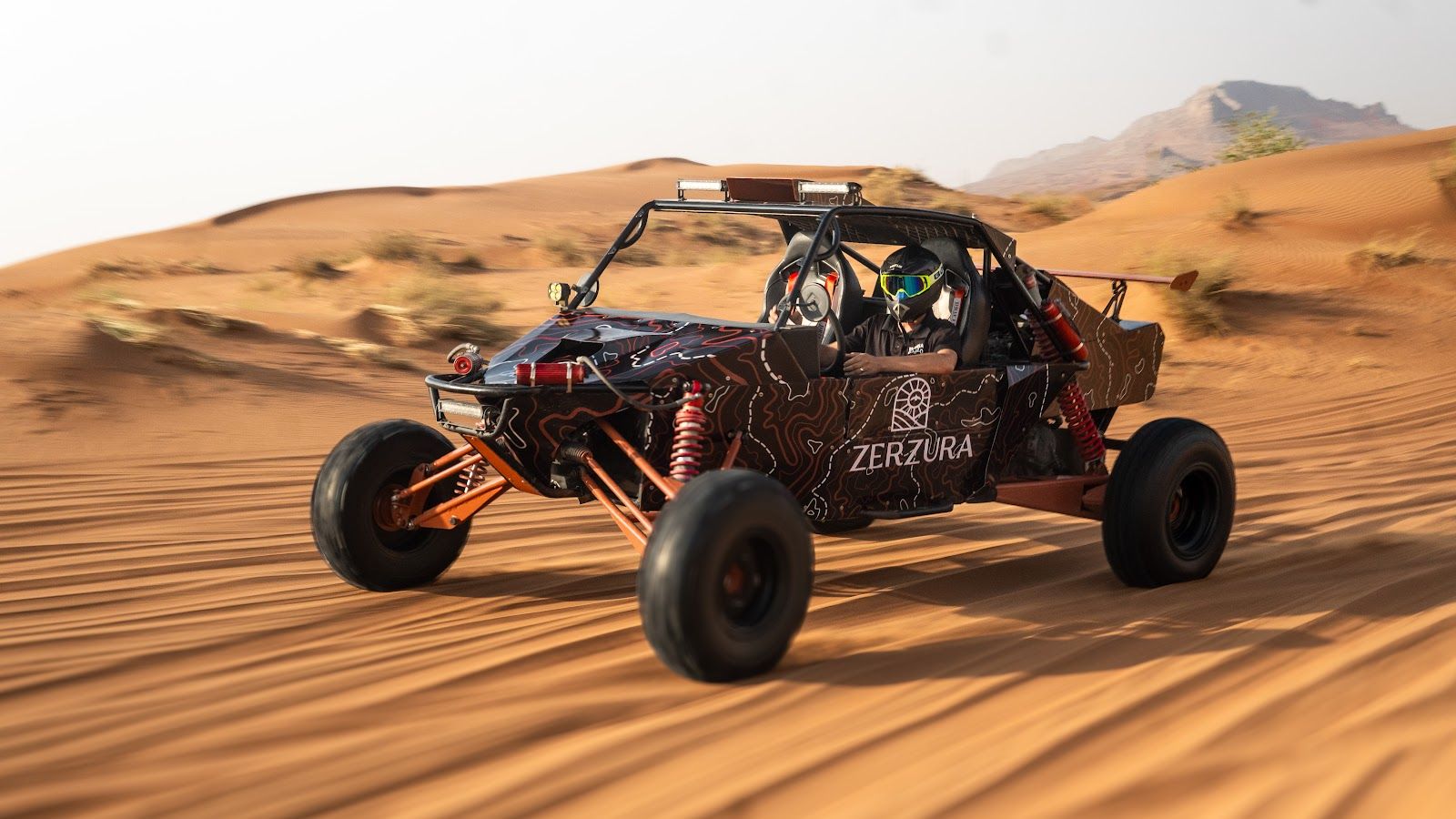
Choose Mleiha if you want a premium, crowd-free day: protected dunes, a self-drive buggy, real history, and private dining, within an hour of Dubai. If price and convenience decide it, the standard city safaris win. If space and quality matter more, Mleiha is the one to book. Whatever you choose, the honest headline is that all three are good days out; the difference is simply how much space and control you want from the desert.
Quick Facts
- Where: Mleiha National Park, Sharjah — 45-60 min from Dubai, ~2 hours from Abu Dhabi
- Drive: Self-drive custom buggy in a guided convoy (no experience needed)
- From: AED 1,200 self-drive; Dune Buggy and Dinner AED 2,200
- Included: Buggy, safety gear, sandboarding, camel ride, refreshments
- Good for: Couples, families, first-time visitors
- Best time: October to April, morning or golden-hour afternoon
Book Your Desert Safari
Still weighing Dubai against Abu Dhabi? Consider the option between them. Compare a premium desert safari in Sharjah, or take the wheel on a self-drive dune buggy in Mleiha. Bookings are open for October, the first month of the cool season and the easiest time to be on the dunes.