The desert safari is the classic Dubai day out - the moment the skyline gives way to open sand. But the phrase covers an enormous range, from a shared 4x4 and a camp buffet to a self-drive day in a protected national park. Knowing the difference is the key to booking the right one.
This guide walks through the types of desert safari near Dubai, what each includes, what they cost, what to wear, and how far you have to go. Then it covers the premium alternative many visitors only discover afterwards: the protected dunes of Mleiha, in neighbouring Sharjah, about 45 to 60 minutes from the city.
What a Dubai desert safari includes
At its core, a desert safari is a guided trip into the dunes built around a handful of classic ingredients. The best known is dune bashing, a fast drive over the sand in a 4x4. Most tours add a desert camp with a buffet dinner, camel rides, sandboarding, henna, shisha, and live entertainment, with hotel transfers usually folded into the price.
It is genuinely good fun, and for a first taste of the desert it is hard to fault. The catch is that the popular camps are shared by many operators running near-identical programmes, so the experience can feel crowded and much the same from one company to the next.
The main types of desert safari
Where you land on price and atmosphere depends mostly on which format you choose:
- Morning safari: cooler and quieter, focused on dune activities like sandboarding and quad bikes
- Evening safari: the classic option, with dune bashing at sunset and a camp dinner under the stars
- Overnight safari: dinner and entertainment followed by a night in the desert, from basic camping to comfortable glamping
- Private and premium safari: smaller groups, better vehicles, and a more exclusive pace for those who want to skip the crowds
Each is a genuinely different day, so it pays to match the format to what you actually want from the desert.
What a desert safari in Dubai costs
A shared evening safari is the budget entry point, bundling transfers, dune bashing, camp entry, dinner, and a show into one low, high-volume ticket. Prices climb as the groups shrink and the service improves.
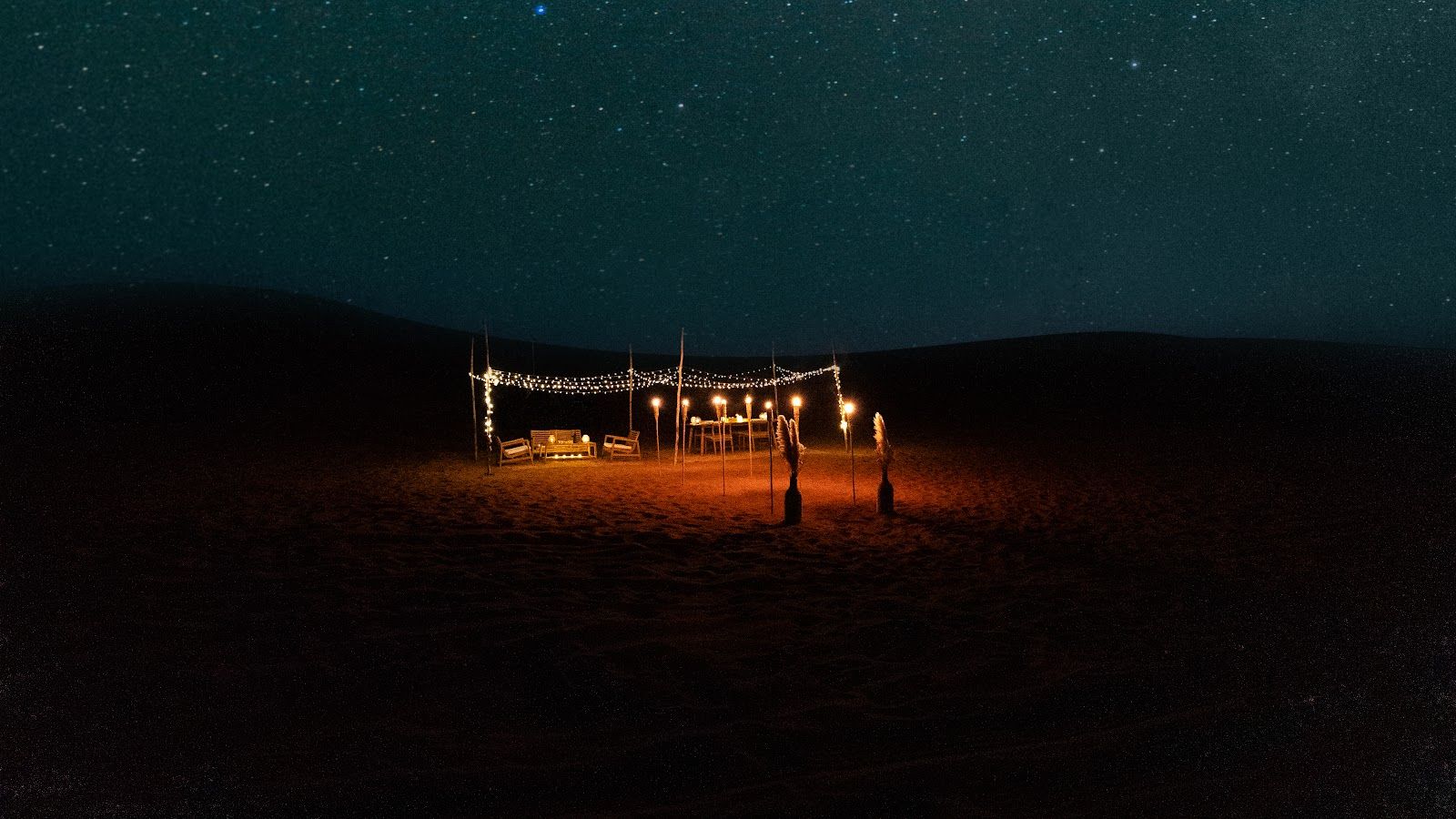
Private and VIP safaris cost more for smaller numbers and better vehicles, and premium self-drive experiences sit higher again, because you get your own machine and a protected setting rather than a shared dune. Exact prices move with season, operator, and inclusions, so it pays to check what a package genuinely covers before comparing on headline price alone. The cheapest deal rarely wins once you factor in crowds, transfer time, and what is actually included.
What to wear and bring
Whichever format you choose, the essentials barely change. Pack light, breathable clothing you do not mind getting dusty, and closed shoes, which are far more comfortable than sandals in soft sand and required for driving activities like dune buggies.
- Sunglasses, a hat, and sunscreen for the daytime sun
- A light layer for after sunset, when the desert cools quickly
- Water to stay hydrated, and a camera for the golden-hour light
From November to March the evenings turn genuinely cool, so a warmer layer earns its place if you are staying for dinner.
How far it is, and how long you need
Standard safari camps sit 30 to 60 minutes from central Dubai, and a shared evening tour runs around six hours including transfers. Mleiha, in Sharjah, is a similar 45-to-60-minute drive, close enough for a half-day and ideal for a full one.
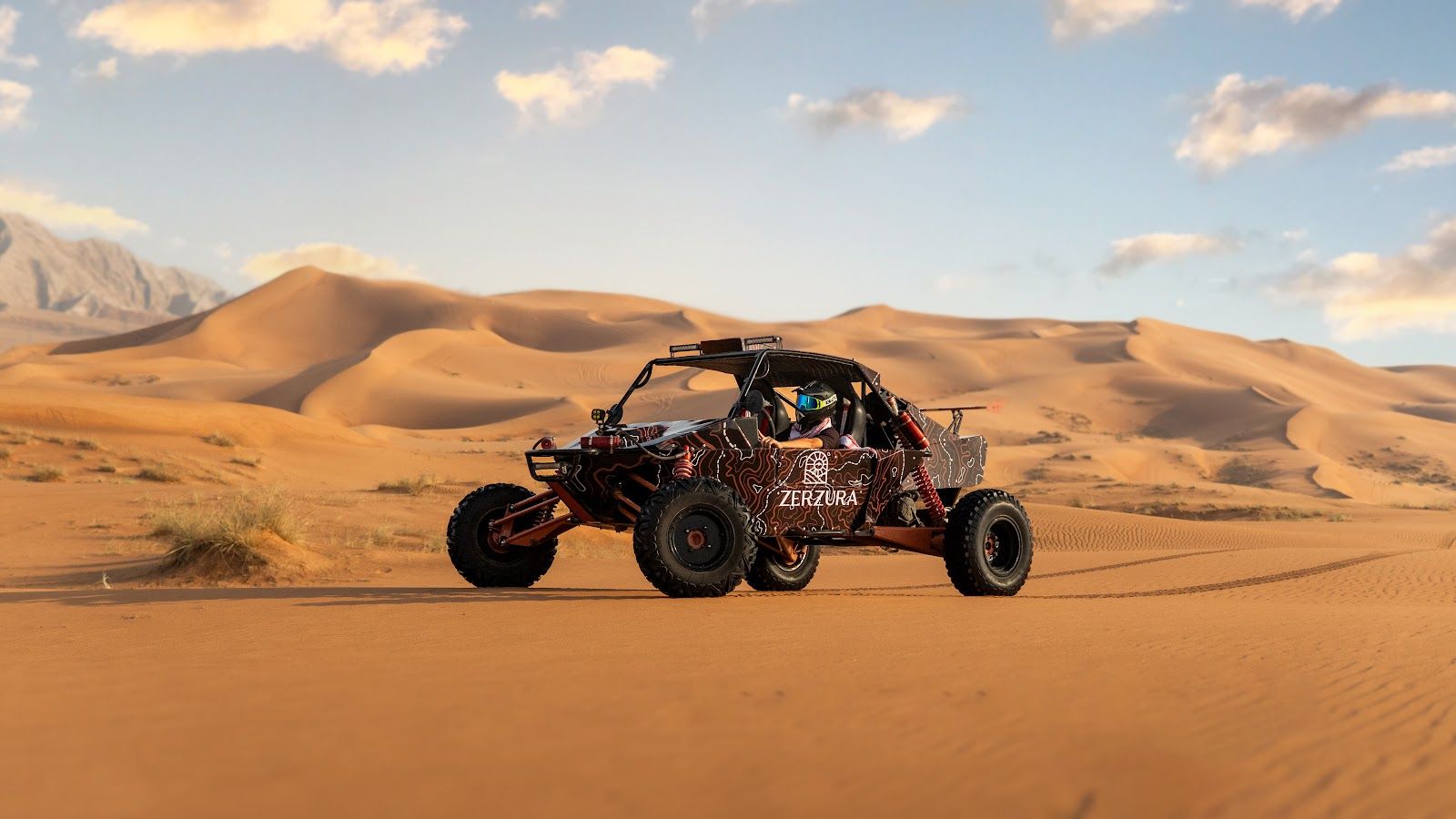
The real difference is control over the day. A camp safari follows a fixed schedule; at Mleiha you decide whether to do a focused half-day around the dune buggies or a slower full day that folds in the fossils, the heritage, and dinner.
The premium alternative: Mleiha
If the crowded camp is the part that puts you off, the better version is one emirate over. Mleiha National Park is a protected desert where the numbers stay low and the landscape stays scenic, and Zerzura is the only operator permitted to run dune buggy tours inside it.
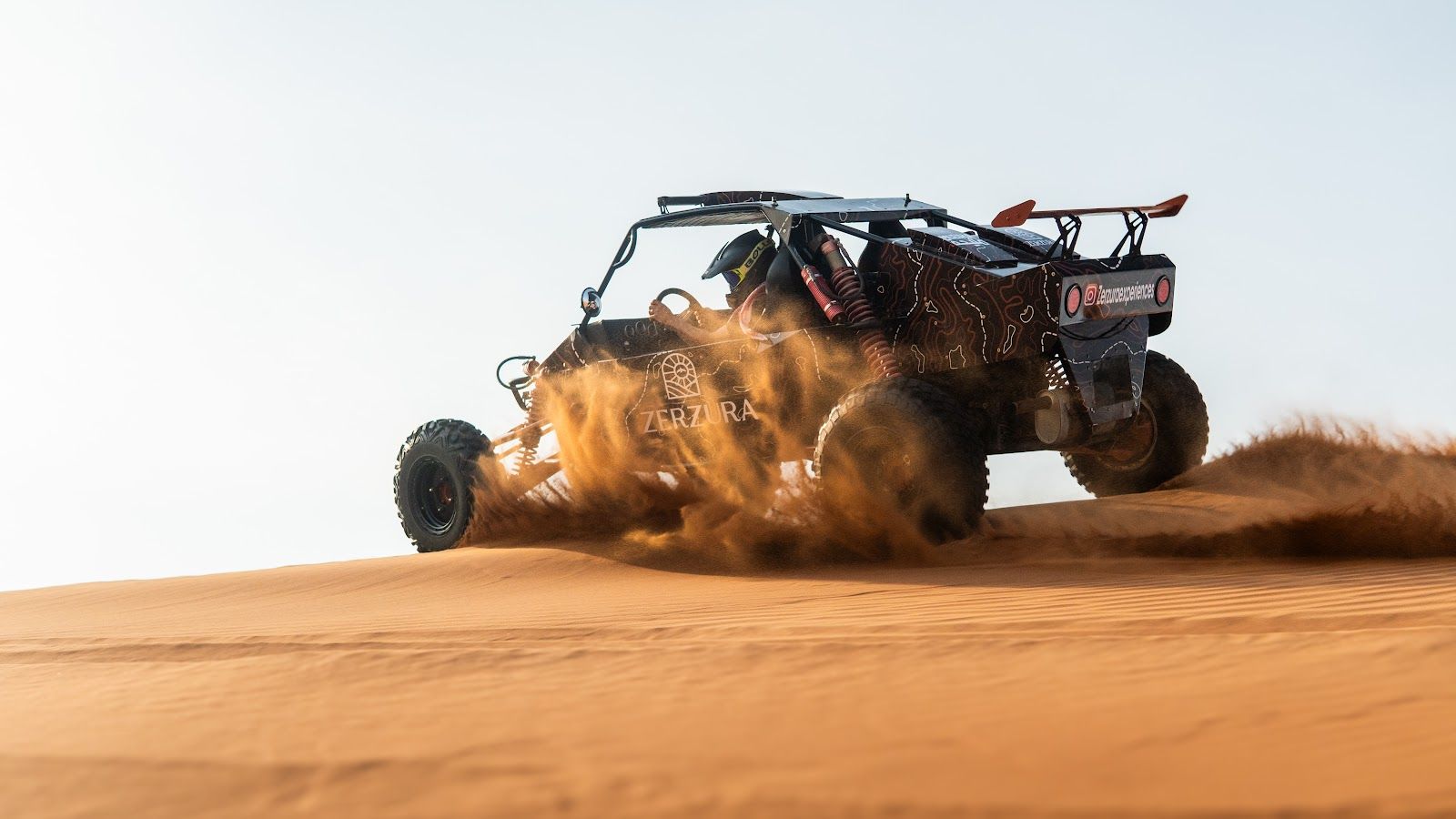
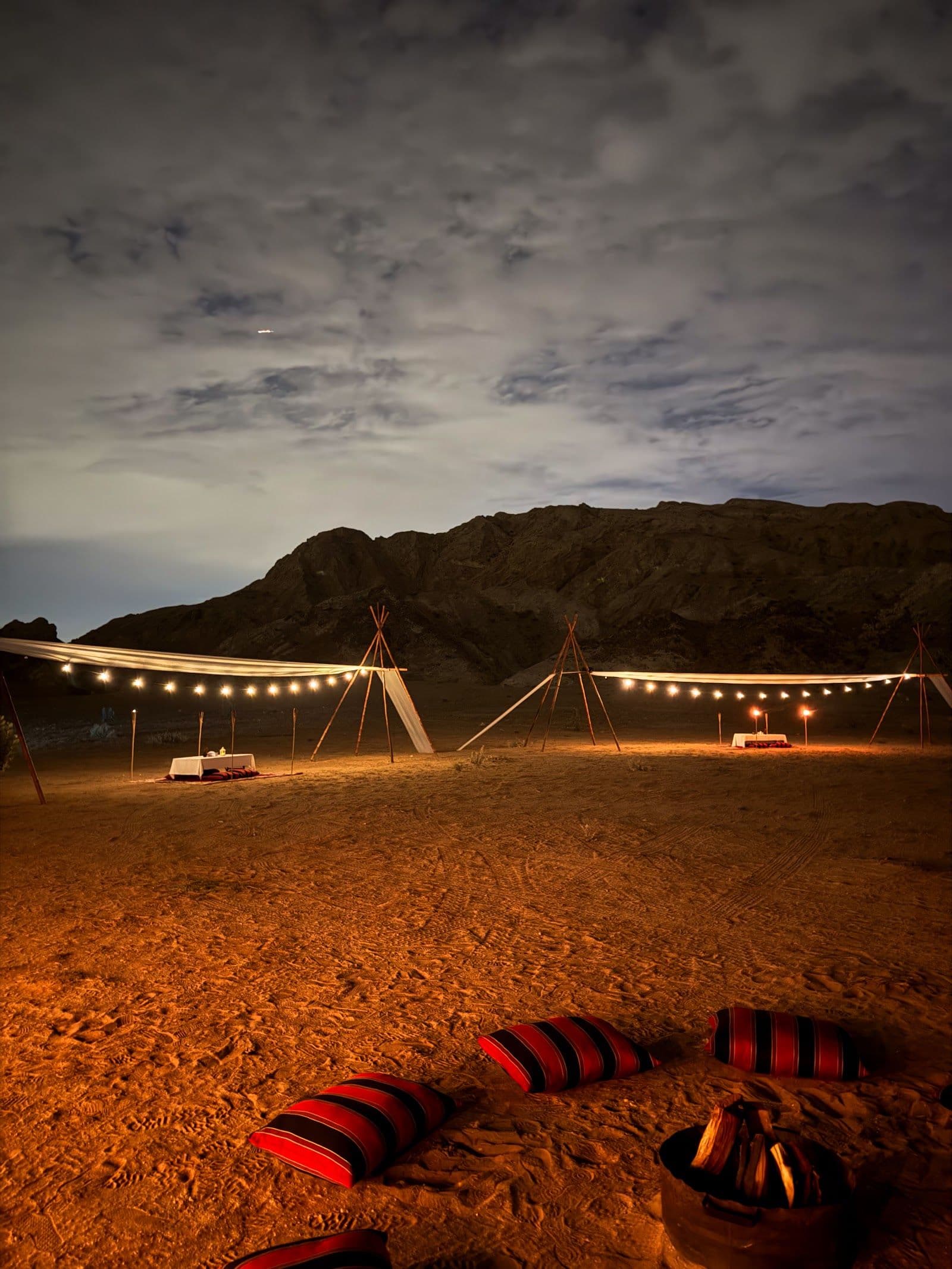
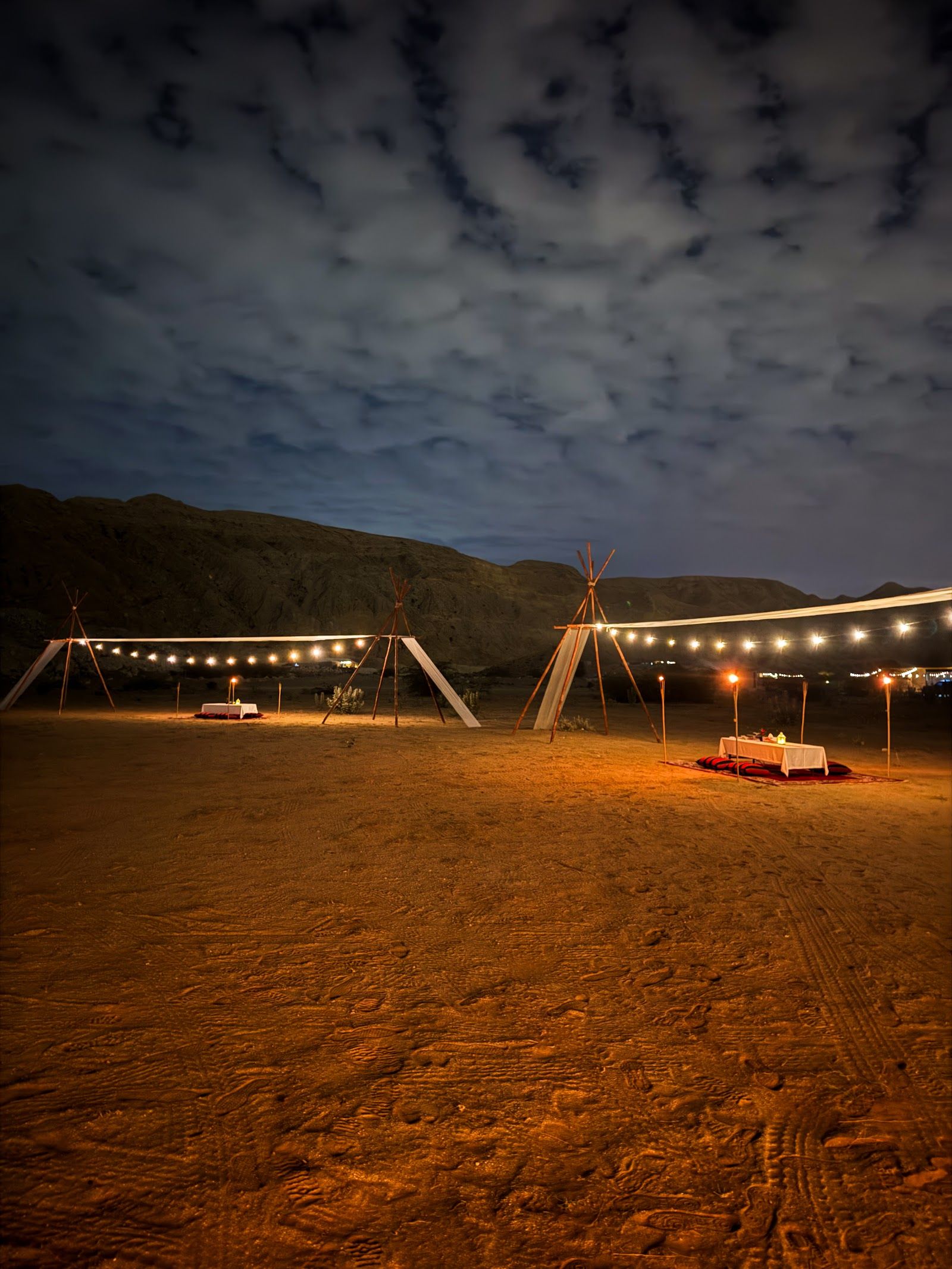
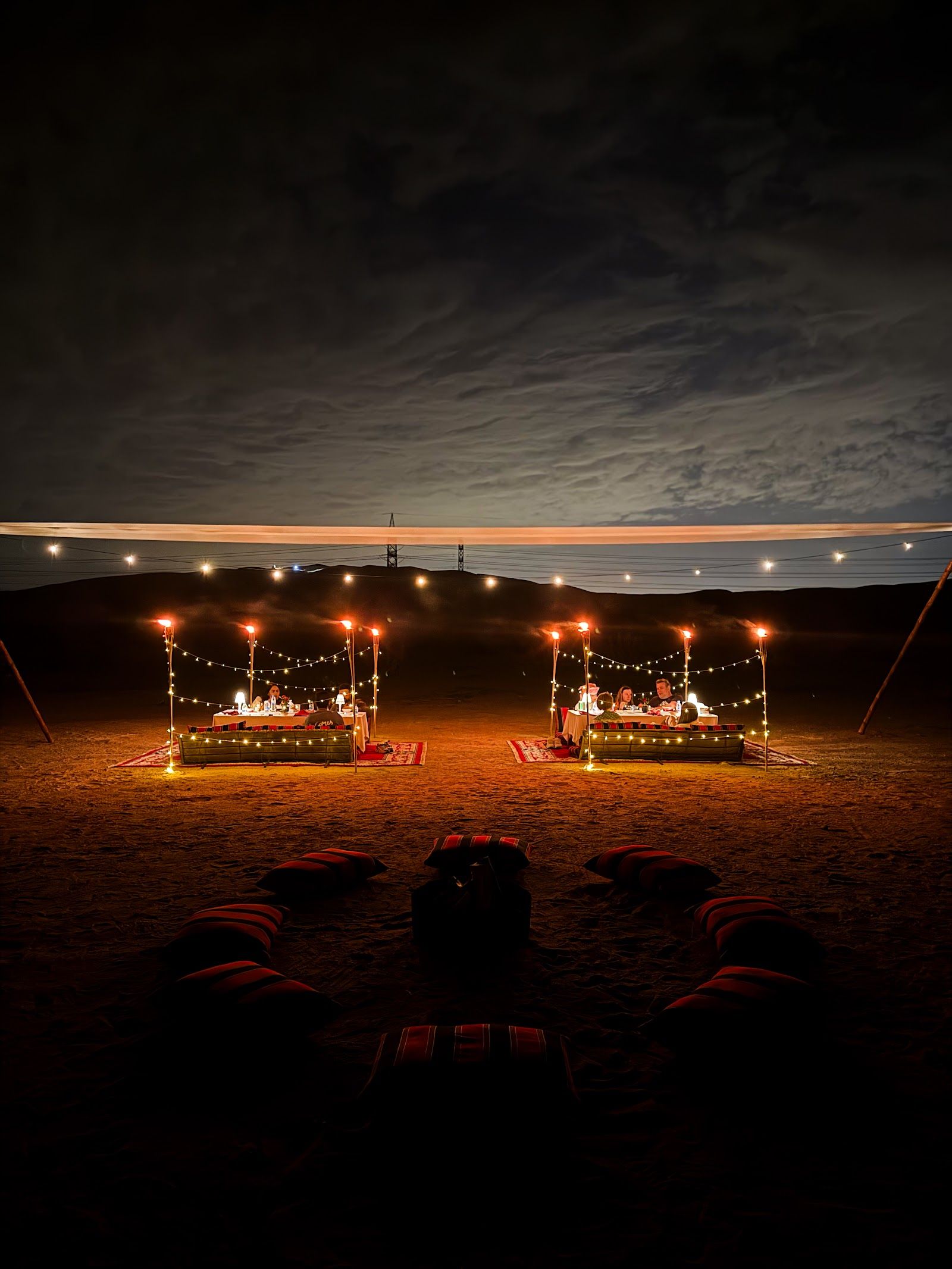
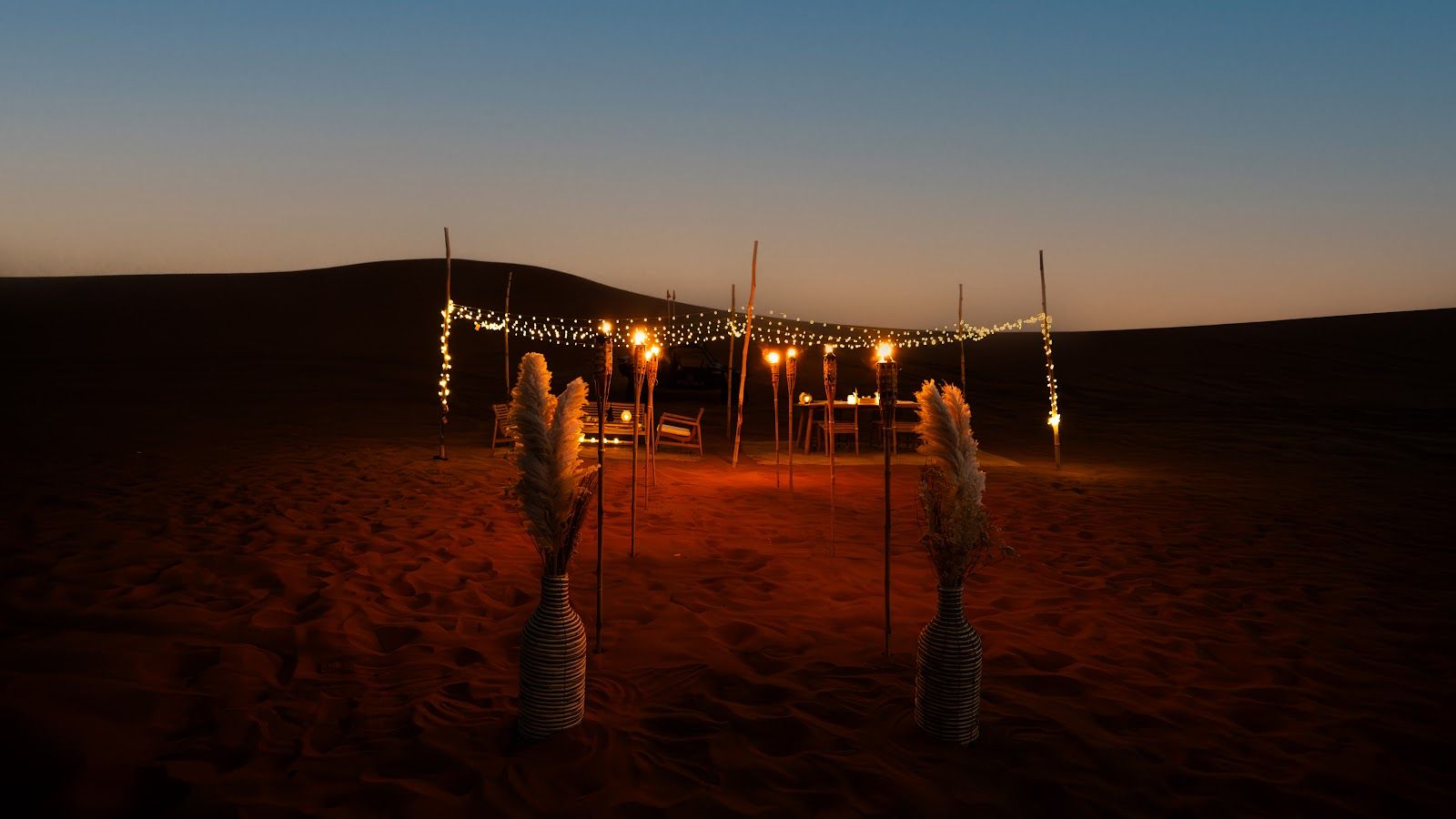
The centrepiece is self-drive. A self-drive dune buggy in Mleiha hands you a custom-built "Desert Fox" buggy to drive across the dunes in a guided convoy, past landmarks like Fossil Rock and Camel Rock. Around it, Mleiha adds depth a camp cannot: a UNESCO-nominated palaeolandscape with 80-million-year-old fossils and 180,000 years of human history. As the day cools, an exclusive desert dining experience in Mleiha replaces the buffet-and-show with a heritage four-course dinner under the stars. Self-drive starts from AED 1,200, and the Dune Buggy and Dinner at Zerzura combination runs from AED 2,200.
Dubai vs Mleiha: which to choose
Choose a standard desert safari near Dubai if you want something affordable, convenient, and lively, with minimal planning and a sociable camp atmosphere.
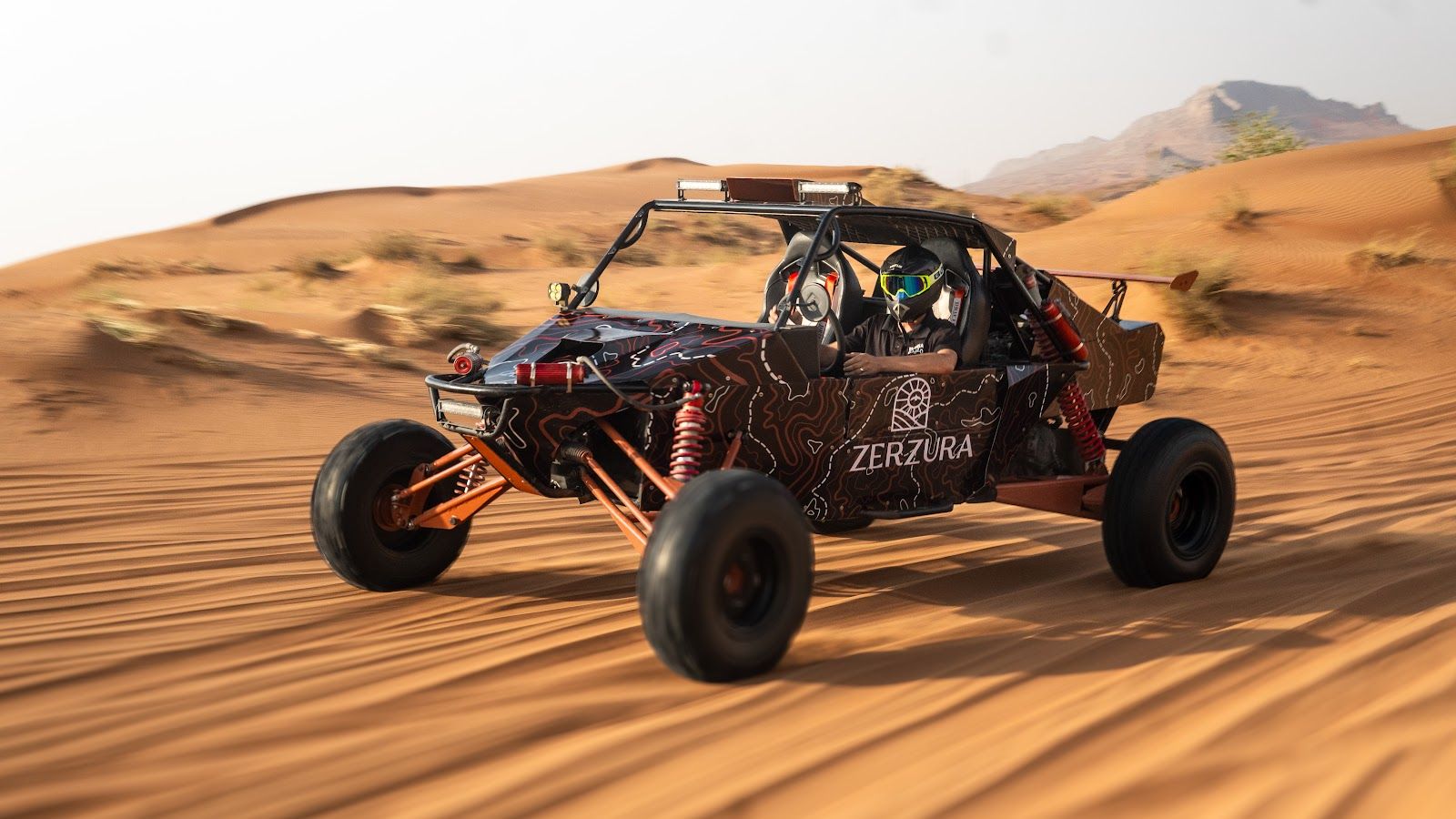
Choose Mleiha if you want a premium, crowd-free day: protected dunes, a buggy you drive yourself, real history, and private dining, all within an hour of the city. It also works as a quieter desert safari in Sharjah or a day-trip alternative to an Abu Dhabi desert safari. They are genuinely different days out, and both are worthwhile - it just depends on whether price or space matters more to you.
Quick Facts
- Where: Mleiha National Park, Sharjah — 45-60 minutes from Dubai
- Drive: Self-drive custom buggy in a guided convoy (no experience needed)
- From: AED 1,200 self-drive; Dune Buggy and Dinner at Zerzura AED 2,200
- Included: Buggy, safety gear, sandboarding, camel ride, refreshments
- Good for: Couples, families, first-time desert visitors
- Best time: October to April, morning or golden-hour afternoon
Book Your Desert Experience
A desert safari in Dubai is worth doing whichever way you choose it. For the premium version - protected dunes, a self-drive buggy, and dinner under the stars - take the wheel on a self-drive dune buggy in Mleiha, or start with desert dining in Mleiha. Bookings are open for October, when the dunes are at their most comfortable.